Training an AI
Follow the training lifecycle, compare alignment methods and explore data pipelines, GPU memory and worked Python examples.
Before you start: Familiarity with Python and basic machine learning concepts.
Video courses and interactive notebooks, with worked examples and sources. Pick the level that fits you and move up when you are ready.
IntroductoryNo background needed. Everyday language.
PractitionerFor people who run, buy or build systems.
TechnicalHands-on. Assumes security or engineering experience.
What happens when you talk to an AI assistant, why it forgets, why it can be wrong, and how it connects to documents and tools.
Start with video 1Understand the system, then test it. Each lesson pairs an explanation with an example and shows what a result does and does not prove.
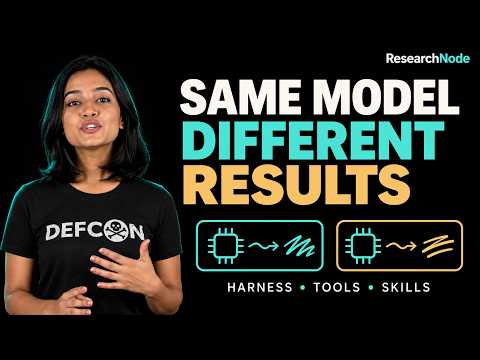
How the model, its instructions, its tools and the application around it work together, and why the same model behaves differently in different products.
24:14
Read at your own pace, explore the examples and check what you have learned. Each notebook shows its intended level and the background it assumes.
Follow the training lifecycle, compare alignment methods and explore data pipelines, GPU memory and worked Python examples.
Before you start: Familiarity with Python and basic machine learning concepts.
Study risk categories, responsibilities and high-risk requirements with a timeline, reference material and self-check questions.
Before you start: An understanding of how AI systems are developed or used in an organisation.
Study the 2024-11-05 protocol architecture, stdio and legacy HTTP+SSE examples, with a link to current transport documentation.
Before you start: Experience reading TypeScript, JSON and HTTP examples. Some examples cover the older HTTP+SSE transport.
Examine direct and indirect injection, context boundaries, testing methods and layered architectural controls.
Before you start: An understanding of LLM applications, tool use and security testing.
Work through reward models, preference optimisation and group-relative learning, including loss functions and Python examples.
Before you start: Python, probability and familiarity with training neural networks.
Compare the EU AI Act, NIST AI RMF and ISO/IEC 42001, and examine a governance intake example.
Before you start: An understanding of organisational risk and the AI system lifecycle. Includes an optional code example.
Explore attention, GQA, RoPE, KV-cache memory and FlashAttention, with mathematical explanations and a verification exercise.
Before you start: Python, linear algebra and familiarity with neural network training and inference.
Evaluate ranked evidence with precision, recall and reciprocal rank, then trace whether an answer uses the context it received.
Before you start: Know what a ranked search result is; simple ratios. Python is optional.
Trace protected HTTP access, distinguish token audience from permission, and test a small authorization decision model.
Before you start: Basic HTTP requests and the difference between a client and server. Python is optional.
Calculate packed weight storage, account for group metadata, and separate storage precision from runtime memory.
Before you start: Bits and bytes, scientific notation, and a basic idea of model parameters.
Compare a batch barrier with slot refilling using a visible request timeline and a deterministic scheduler.
Before you start: Know that requests can finish at different times. No GPU or serving framework is required.
Explore vector direction, calculate cosine scores and see why a geometric match does not prove answer relevance.
Before you start: Coordinate pairs and simple multiplication. Trigonometry is explained by the picture.
Follow authenticated identity into retrieval policy and compare filtering before and after a top-k cut.
Before you start: Basic RAG retrieval and the idea of users, groups and document permissions.
Inspect a greedy draft-token prefix, locate the first mismatch and follow the target correction.
Before you start: Autoregressive token generation and the meaning of greedy decoding.
Separate startup, readiness and liveness decisions, then inspect what a request timeout can and cannot guarantee.
Before you start: Basic services and requests. Python async familiarity helps with the optional timeout note.
Compare row splits with held-out groups and see how a memorizing baseline can produce a misleading result.
Before you start: Training and test sets, binary labels and simple accuracy.
Separate tensor format, executable code, pinned revisions and checksum checks in a model artifact review.
Before you start: Files, hashes and the idea that loading software can execute code.
Distinguish calibration from accuracy, calculate a binary Brier score, and examine how aggregation hides probability errors in a synthetic example.
Before you start: You should understand basic probabilities, averages and binary labels, and be able to read simple Python.
Trace prompt processing, the first selected output token and subsequent decode forwards; distinguish processed cache positions from sampled tokens and calculate a synthetic KV memory budget.
Before you start: You should understand tokens, transformer layers and basic Python lists and arithmetic.
Evaluate training-data membership claims using confusion counts, low false-positive rates and explicit assumptions about candidate populations.
Before you start: You should understand training and test datasets, binary classification and basic probability.
Study retrieval-augmented generation, HNSW search, lexical–dense rank fusion, reranking, context evaluation, and guarded tool execution through a synthetic Python lab.
Before you start: You should understand transformer inference, vector similarity, basic probability, and Python functions and dictionaries.
Analyze adapter updates, training-state memory, quantized weight storage and calibration-based quantization, then work through merging and a synthetic NF4 teaching lab.
Before you start: You should understand matrix multiplication, gradients, floating-point precision and the purpose of an optimizer.
Study conditional computation, method-specific routing, capacity limits, balancing objectives and distributed expert placement through worked calculations and a synthetic Python lab.
Before you start: You should understand Transformer feed-forward layers, softmax, matrix multiplication and basic gradient-based optimization.
No notebooks at this level match your search.
AI-assisted study material with worked examples and source links. Each notebook records its provenance and review scope. Levels describe the background assumed, rather than a qualification.